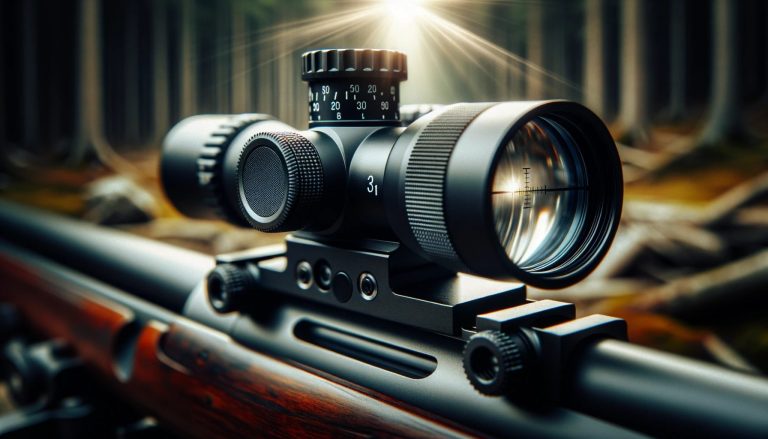
Second focal plane scopes keep the reticle the same visible size as magnification changes. The target image gets larger or smaller as you zoom, but the crosshair, center dot, duplex reticle, or BDC pattern stays familiar to the eye. That is why SFP scopes remain common on hunting rifles, basic range rifles, many LPVOs, and value-focused rifle scope setups.
This page is about the practical side of SFP: when a constant-looking reticle helps, how to avoid BDC and holdover mistakes, and how to choose an SFP scope for a hunting rifle, range rifle, or low-power variable optic.
The Main Advantage Of SFP
The main advantage is visual consistency. At low magnification, the reticle does not shrink into a fine thread. For many hunters and general-purpose rifle owners, that matters more than having measured reticle marks that work at every power. A bold aiming point is easier to find when the rifle comes up quickly, light is low, or the target is moving through cover.
SFP is also easier to buy on a budget. Because the reticle system is simpler, many shooters can get better glass, a more forgiving eye box, or a more durable scope at the same price than they would with a comparable FFP model.
Where SFP Scopes Make The Most Sense
- Woods and moderate-range hunting: a duplex or simple illuminated reticle is fast, visible, and easy to trust.
- 3-9x and 2.5-10x hunting scopes: many hunters use a simple zero, known holdover, or dialed correction instead of a complex reticle grid.
- Budget rifle scopes: SFP can leave more of the budget for glass quality, coatings, durability, and warranty support.
- SFP LPVOs: a visible center aiming point can be faster at 1x or low power than a fine FFP reticle.
- Known-distance range work: if the distance is fixed or predictable, a constant reticle is often enough.
The BDC And Holdover Catch
The biggest SFP mistake is treating every reticle mark as if it works at every magnification. On many SFP scopes, BDC, MIL, or MOA marks are calibrated at one magnification setting, often the highest power. If you turn the scope down and still use the same mark, the hold can be wrong.
| Before relying on SFP hold marks | Why it matters |
|---|---|
| Find the calibrated magnification | The manual should identify the power where BDC, MIL, or MOA marks match the intended subtension. |
| Confirm your zero distance | A BDC reticle assumes a certain zero and ballistic profile; your rifle may not match it exactly. |
| Test with your ammunition | Bullet weight, velocity, barrel length, and environment can shift real impacts. |
| Write down actual holds | A small dope card beats guessing in the field. |
Hunting Zero And BDC Workflow
A practical SFP setup often starts with a simple zero rather than a complicated reticle plan. Many hunters choose a 100-yard or 200-yard zero, confirm the rifle with the ammunition they will carry, then learn where the bullet lands at the distances they actually expect. The goal is a predictable hold, not a reticle that looks impressive on a product page.
If the scope has a BDC reticle, verify it from a stable position at known distances. Shoot at the calibrated magnification, record what each mark really does with your rifle, and keep that note with the rifle or in your range book. For a capped-turret hunting scope, this range-confirmed card is often more useful than trying to memorize a generic ballistic chart.
Common SFP Reticle Styles
- Duplex: fast, uncluttered, and useful for many deer rifles and general hunting scopes.
- Illuminated center dot: helpful at low power or in mixed light when the scope is used quickly.
- BDC ladder: useful only after the shooter confirms the zero, ammunition, and calibrated magnification.
- Simple hash reticle: more flexible than a duplex, but it still needs range verification before field use.
Where SFP Needs Extra Care
SFP needs extra care when the rifle is used past the simple point-blank range of the zero. The scope can still work well, but the shooter needs a clear plan: dial the turret, use the reticle only at its calibrated magnification, or confirm real holds at the range and write them down. Guessing from the reticle picture alone is where SFP users get into trouble.
SFP Buying Checklist
- Choose the magnification range for the real distance, terrain, and rifle weight you expect.
- Look for a reticle you can see quickly at the lowest magnification you will use.
- Read the manual before trusting BDC, MIL, or MOA marks.
- Check eye relief, eye box, turret feel, and warranty instead of choosing by focal plane alone.
- Confirm zero and practical holds at the range with the rifle and ammunition you actually use.
Second Focal Plane Scope FAQs
Is SFP bad for long range?
No. SFP can work at longer distances if the shooter dials corrections or uses the reticle at the calibrated power. The important step is confirming real impacts instead of assuming the BDC ladder perfectly matches the rifle.
Why do many hunting scopes use SFP?
Many hunting scopes use SFP because the reticle remains easy to see, the scope can be simpler and more affordable, and most hunters do not need complex reticle corrections across the entire zoom range.
Can SFP reticle marks still be accurate?
Yes, but usually at the magnification where the manufacturer calibrated them. Confirm that setting, then verify the marks with your rifle, ammunition, and zero distance.
Further Reading
- Leupold FAQ on first and second focal plane reticles[1]
- Primary Arms guide to first focal plane vs second focal plane[2]