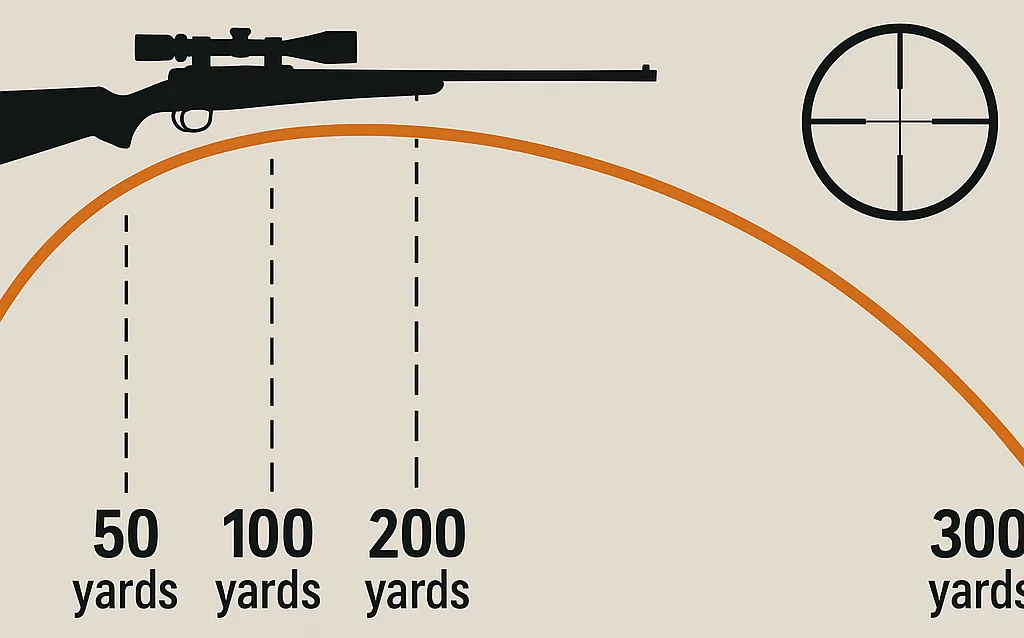
Use this free ballistics calculator to estimate bullet drop, wind drift, retained velocity, and energy before you compare loads or build range notes. Enter the best numbers you have, then treat the output as a starting point to confirm with safe range work.
The calculator is most useful when you already know your bullet weight, ballistic coefficient, muzzle velocity, zero distance, and expected wind. For the underlying concept, read the bullet drop trajectory guide.
Free Bullet Drop and Ballistics Calculator
Ballistics calculator
Estimate trajectory, wind drift, retained velocity, and energy from your load data.
At
Trajectory path
Height relative to line of sightThe zero point is solved from sight height and the selected zero distance.
Range data
| Range | Height | Drift | Velocity | Energy |
|---|
Estimates use a G1 drag model and the conditions entered. Confirm your load and zero at the range before making a shot.
Before You Use the Ballistics Calculator
A ballistics calculator is a planning tool, not a substitute for live range confirmation. Use it to estimate bullet drop, wind drift, retained velocity, and energy before you compare loads or make scope notes. Then confirm the numbers with safe range work, a proper backstop, and the rules for your range, hunting area, or local jurisdiction.
Inputs to gather first
- Bullet weight: the projectile weight in grains, usually printed on the ammunition box.
- Muzzle velocity: the listed or chronographed velocity for the specific load and barrel length.
- Ballistic coefficient: the manufacturer’s G1 coefficient when available.
- Zero distance: the distance where your optic or sights are confirmed to match point of aim.
- Wind speed and conditions: use a conservative estimate and remember that wind can change across the bullet’s path.
Bullet Drop Calculator Example Inputs
If you only need a quick starting point, use the calculator to compare one rifle load at a time. For example, a 150-grain rifle bullet with a 0.415 G1 ballistic coefficient, 2,800 fps muzzle velocity, a 100-yard zero, and a 10 mph crosswind gives you a consistent baseline to compare against another load.
| Input | Example value | Why it matters |
|---|---|---|
| Bullet weight | 150 grains | Used with velocity to estimate energy. |
| Ballistic coefficient | 0.415 G1 | Helps estimate how quickly the bullet slows in flight. |
| Muzzle velocity | 2,800 fps | Changes drop, wind drift, and retained energy. |
| Zero distance | 100 yards | Sets the point of aim reference for drop estimates. |
| Wind speed | 10 mph | Creates a consistent drift estimate for comparison. |
These are example inputs, not a universal dope chart. Use your actual rifle, barrel length, ammunition box data, chronograph data when available, and confirmed zero distance. After the calculator gives an estimate, record the result with your range notes and confirm it on paper.
How to Read the Results
The calculator output is easiest to use when you treat each number as an estimate in context. Bullet drop shows the vertical path relative to your zero. Windage estimates horizontal drift from the wind speed you entered. Kinetic energy helps compare how much energy different loads retain at the selected distance.
| Result | What it helps compare | What can change it |
|---|---|---|
| Bullet drop | Trajectory relative to the zero distance | Velocity, ballistic coefficient, sight height, distance, and air density |
| Windage | Estimated horizontal drift | Wind direction, wind speed, terrain, and time of flight |
| Kinetic energy | Retained energy between loads | Bullet weight, velocity, and distance |
A Practical Workflow
- Start with the factory ammunition data or your own chronograph data.
- Enter the zero distance you actually confirmed on paper.
- Compare two or three loads at the same distance instead of changing every input at once.
- Record the estimate, then verify it at the range before relying on it.
Related Guides
For more background, read our guide to bullet drop and trajectory, compare common ammunition considerations, review the main rifles guide, and use the LPVO scopes guide when choosing magnified optics for a rifle.
Always handle firearms safely, follow range rules, and verify any calculated estimate in controlled conditions before using it for hunting, competition, or equipment setup.