If you already know you want a rifle, the real question is not “what is a rifle?” It is which rifle setup fits the job. A lightweight deer rifle, rimfire trainer, AR-style range rifle, precision rifle, and historical military rifle all sit in the rifle category, but they reward different choices in caliber, action, optic, weight, recoil, and ammunition cost.
Use this guide after the broad types of guns comparison. This page focuses on practical rifle decisions: what you plan to do with the rifle, what cartridge class makes sense, how much recoil and ammunition cost you can live with, which sighting system fits, and what training or safety habits should come next.
Quick Rifle Choice Map
| Primary use | Common rifle path | Why it fits | Next TRGG guide |
|---|---|---|---|
| New shooter or inexpensive practice | Rimfire trainer | Low recoil, low noise, lower ammunition cost, easier fundamentals practice. | Firearms training |
| Deer and general hunting | Bolt-action hunting rifle | Reliable, accurate, portable, and widely supported by hunting cartridges. | Best hunting rifles |
| Range, defensive training, and modular setup | AR-style semi-automatic rifle | Fast follow-up shots, broad parts support, and flexible optic/sling/light options. | AR-15 scopes |
| Long-range or bench shooting | Heavier precision rifle | Better stability, stronger optic support, and cartridges built for distance. | Ballistics calculator |
| Historical collecting | Surplus or classic rifle | Mechanical history, collectibility, and a different shooting experience. | Swedish Mauser rifle |
Start With The Job
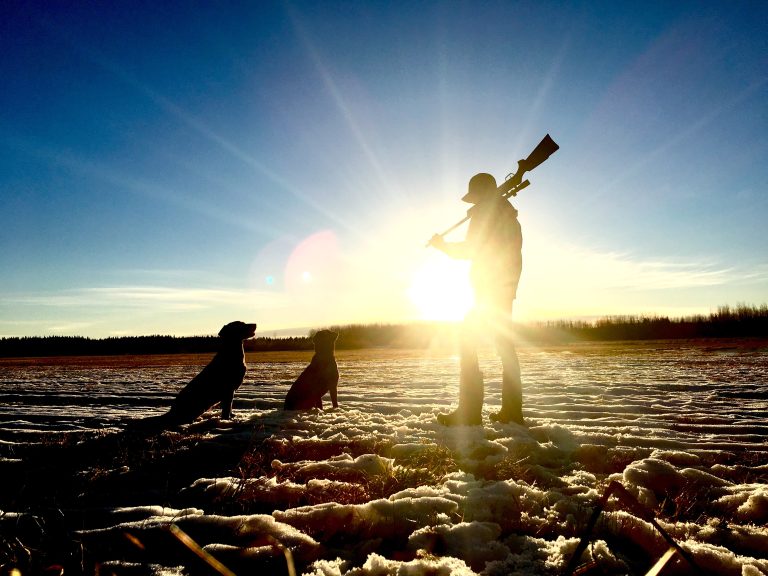
A rifle choice gets easier when you stop shopping by name and start with the job. A rifle carried through brush all day should not be judged by the same standard as a bench rifle that spends most of its life on bags or a bipod. A training rifle should make practice affordable. A hunting rifle should balance accuracy with weight, weather resistance, safe handling, and the likely distance of the shot.
Hunting Rifle
For most hunters, the first priorities are reliability, weight, practical accuracy, and a cartridge matched to the animal and terrain. A rifle that groups well from a bench but is too heavy to carry or too punishing to practice with can be a poor field rifle. Start with the hunting conditions, then choose action, cartridge, and optic around that reality.
For examples, compare the dedicated best hunting rifles guide and the best 30-06 rifles roundup.
Rimfire Training Rifle
A rimfire rifle is often the best way to build rifle fundamentals because it lets you practice sight picture, trigger control, follow-through, safe muzzle direction, and positional shooting without heavy recoil or high ammunition cost. It is not a substitute for training with your centerfire rifle, but it can multiply useful practice time.
AR-Style Range Rifle
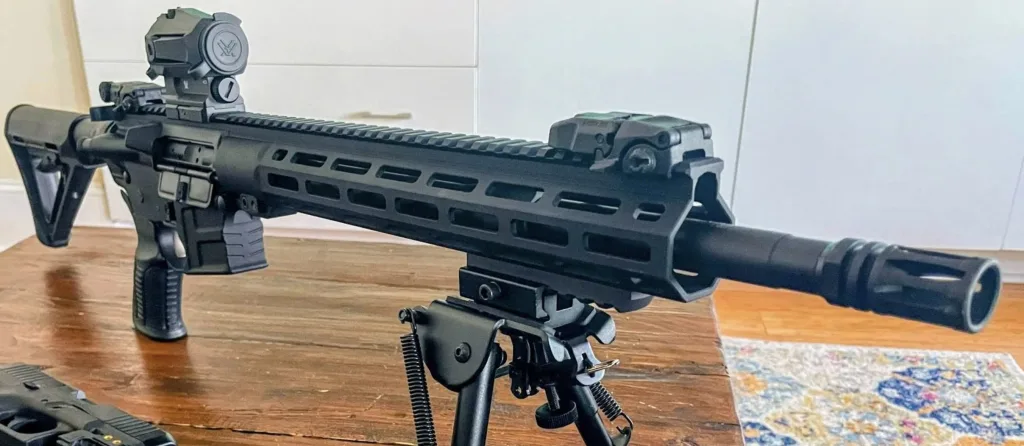
AR-style rifles are useful when modularity matters. The same basic platform can be configured for a red dot, LPVO, magnified scope, sling, weapon light, different barrel lengths, and different training goals. That flexibility is an advantage, but it also makes it easy to overbuild the rifle before you have enough range time to know what you need.
Precision Or Long-Range Rifle
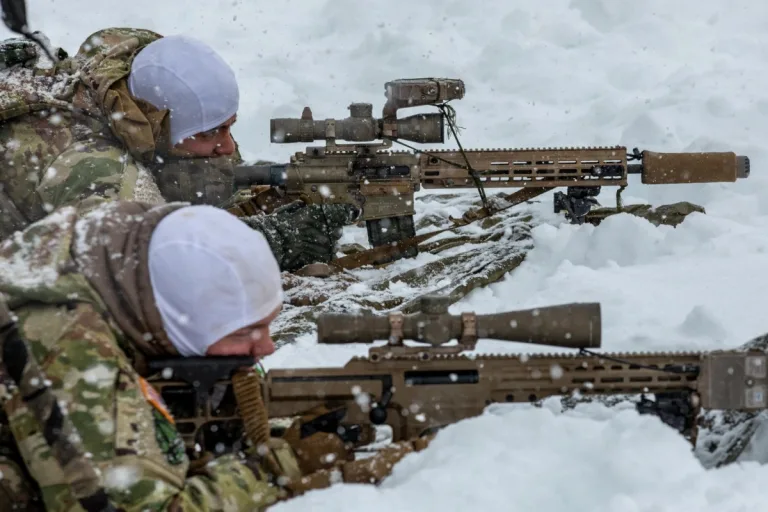
A precision rifle usually shifts the tradeoff toward weight, stability, trigger quality, optic quality, and cartridge consistency. The rifle is only one part of the system. You also need repeatable ammunition, a scope that tracks correctly, a stable shooting position, and enough data to predict bullet drop and wind drift.
Use the free ammo ballistics calculator and the bullet drop trajectory guide when you are comparing loads or distances.
Cartridge Class Matters More Than Cartridge Hype
Cartridge choice affects recoil, cost, barrel life, ammunition availability, downrange energy, and how often you actually train. The best rifle cartridge is not always the hardest-hitting option. For many owners, a cartridge they can afford to practice with beats a more powerful cartridge they rarely shoot.
| Cartridge class | Typical role | Main advantage | Main tradeoff |
|---|---|---|---|
| Rimfire | Training, small game, fundamentals | Low cost and mild recoil | Limited range and power |
| Intermediate centerfire | Range, competition, defensive training, varmint use | Manageable recoil and high parts support | Not ideal for every hunting job |
| Full-power hunting cartridge | Deer, elk, larger game, traditional field rifles | More retained energy and proven hunting use | More recoil, blast, and ammunition cost |
| Magnum or specialty long-range | Extended distance and specialized hunting | Flatter trajectory or higher retained energy | More cost, recoil, barrel wear, and setup demands |
For broader ammunition concepts, start with ammunition. For rifle-specific history, see rifle ammo history.
Action Type Is A Tradeoff, Not A Ranking
Action type changes how the rifle loads, cycles, and handles follow-up shots. It also affects maintenance, price, field reliability, and the kind of optic or stock setup that feels natural. The broad action names belong on the main types of guns hub; here the question is what each action does for your use case.
| Action path | Best fit | Decision notes |
|---|---|---|
| Bolt-action | Hunting, precision, simple field rifles | Strong accuracy reputation, simple manual cycling, slower follow-up shots. |
| Semi-automatic | Range, competition, defensive training, modular builds | Fast follow-up shots, more moving parts, more attention to maintenance and safe handling. |
| Lever-action | Traditional hunting, brush guns, collecting | Fast manual cycling and classic handling, often tied to specific cartridge and optic limits. |
| Single-shot or break-action | Training, hunting simplicity, specialty use | Simple and deliberate, but follow-up shots are slow. |
Optics And Setup Path
A rifle setup should match the distance and target size you actually shoot. Iron sights, red dots, LPVOs, traditional scopes, slings, bipods, and lights all solve different problems. Adding gear before defining the job can make the rifle heavier, slower, and harder to maintain.
| Setup choice | Useful when | Related guide |
|---|---|---|
| Iron sights | Fundamentals, backup sights, simple training rifles | Firearms training |
| Red dot | Close to moderate range speed | Best red dot sights |
| LPVO | Fast 1x use plus moderate magnification | LPVO scopes guide |
| Traditional magnified scope | Hunting, target work, precision, load testing | Gun optics, scopes, and sights |
| Sling | Carrying, stabilizing, and controlling the rifle safely | Single-point sling guide |
Total Cost: Rifle, Ammo, Optic, Training
The purchase price is only part of the rifle decision. Budget for ammunition, magazines or spare parts if applicable, optic and mounts, sling, safe storage, cleaning gear, range time, and instruction. A less expensive rifle with enough ammunition and training often produces better results than an expensive rifle that leaves no room for practice.
Safety, Storage, And Legal Context
Rifles deserve the same safety discipline as every firearm: know the condition of the rifle, control the muzzle, keep your finger off the trigger until ready to fire, identify the target and what is beyond it, and store it so unauthorized people cannot access it. Longer range also means greater responsibility for backstop awareness.
Before buying, review gun safety, gun laws, and your state-specific rules. Laws can change and may affect purchase age, prohibited places, transport, storage, hunting, and specific rifle configurations.
Rifle Buying Checklist
- Define the primary use before comparing models.
- Choose a cartridge you can afford to practice with.
- Match action type to the kind of shooting you will actually do.
- Check rifle weight with optic, sling, and loaded magazine included.
- Confirm ammunition availability in your area.
- Budget for optic, mounts, storage, maintenance, and training.
- Handle the rifle safely before buying when possible; length of pull, comb height, controls, and balance matter.
- Read current laws and range or hunting rules before use.