LPVO scopes, or low power variable optics, are rifle optics built for rifles that need speed at low magnification and enough zoom for more careful shots at moderate distance. Most LPVOs start at or near true 1x and increase to 4x, 6x, 8x, or 10x depending on the model.
This guide is the buying framework. It explains what LPVOs do, how the magnification ranges compare, which features matter, and what to check before choosing one for a rifle or carbine.
If you want model recommendations, use our best LPVO scopes roundup. If you are deciding between optic types, use the separate LPVO vs fixed scope comparison.

What this LPVO guide covers
- What an LPVO scope is
- How 1-4x, 1-6x, 1-8x, and 1-10x LPVOs compare
- The LPVO feature checklist
- FFP vs SFP LPVO scopes
- Mounting and setup considerations
- Common LPVO buying mistakes
- Where to compare specific LPVO models
What is an LPVO scope?
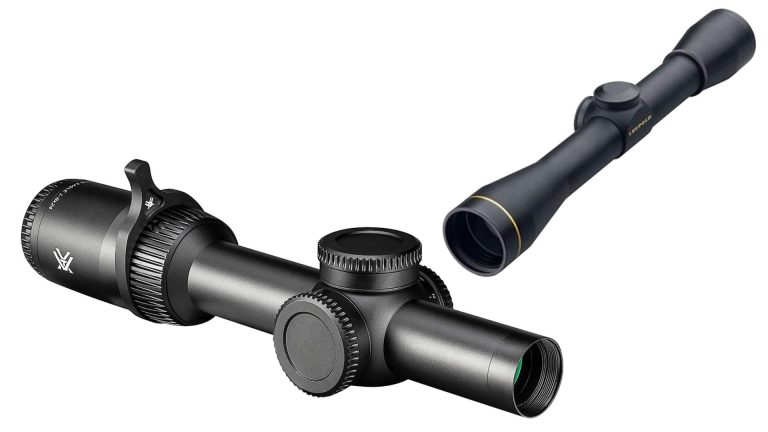
An LPVO is a variable-power rifle scope with a low minimum magnification. The low end is meant to stay fast and usable up close. The high end gives enough magnification for better target identification and more precise aiming at moderate distance.
The core appeal is flexibility. Instead of setting up a rifle only for close work or only for magnified shooting, an LPVO gives one optic a wider working range.
That flexibility comes with tradeoffs. LPVOs are usually heavier than non-magnified sights, their 1x performance depends heavily on glass and reticle design, and more magnification can make eye box and brightness issues easier to notice.
LPVO magnification ranges
LPVO magnification ranges overlap, but each range has a different feel. More top-end magnification is not automatically better. The best range is the one that fits the rifle’s real job.
| Range | Best fit | What to watch |
|---|---|---|
| 1-4x | Lightweight carbines, short-range range work, simple setups | Limited top-end detail |
| 1-6x | General-purpose rifles, hunting inside moderate distance, practical range use | Usually the easiest range to balance |
| 1-8x | Rifles that need more reach while keeping a low 1x setting | Weight, price, reticle usability, and eye box |
| 1-10x | Users who want maximum LPVO reach from one optic | High-end glass and a forgiving eye box matter more |
A good 1-6x LPVO is often the most practical starting point. It gives enough magnification for many rifle uses without pushing as hard into the weight, eye box, and price tradeoffs that can show up in higher-magnification LPVOs.
A 1-8x or 1-10x can make sense when you want more reach from the same rifle, but those optics should be judged by the whole package. A sharp, forgiving 1-6x can be more useful than a cheaper 1-10x that is difficult to use at either end of the range.
LPVO feature checklist
True or near-true 1x performance
The low end is one of the main reasons to choose an LPVO. Check whether the optic feels natural at 1x, whether the image has distracting distortion, and whether the field of view is wide enough for the way you plan to use the rifle.
Eye box and eye relief
The eye box is the area behind the scope where the image is easy to see. A forgiving eye box makes the optic faster from imperfect positions. Eye relief matters for comfort, recoil management, and consistency behind the rifle.
Reticle design
A useful LPVO reticle should be quick to find at low power and still helpful when magnified. Some shooters prefer a simple illuminated center point. Others want hold marks for distance or wind. The right reticle depends on how much information you can use without slowing yourself down.
Illumination
Illumination helps the reticle stand out at low power and in mixed lighting. Brightness, battery life, daylight visibility, and whether the center aiming point blooms or stays clean are all more important than the number of brightness settings alone.
Glass quality and durability
Better glass usually shows up as a clearer image, less distortion, better low-light performance, and a more usable high-magnification setting. Durability matters too, especially if the rifle gets carried, transported, trained with, or hunted with regularly.
FFP vs SFP LPVO scopes
LPVOs are available in first focal plane and second focal plane designs. The decision affects how the reticle behaves as you change magnification.
First focal plane LPVOs
In a first focal plane LPVO, the reticle changes size as magnification changes. Hold marks stay accurate across the magnification range, which can help if you use the reticle for distance, wind, or bullet-drop references. The tradeoff is that the reticle can look small at low power if the design is not bold or bright enough.
Second focal plane LPVOs
In a second focal plane LPVO, the reticle appears the same size as magnification changes. This can make the reticle easier to see at low power. The tradeoff is that hold marks are usually calibrated for one magnification setting, commonly the highest setting.
For more detail, compare our guides to first focal plane scopes and second focal plane scopes.
Mounting and setup considerations
An LPVO is only as useful as the setup around it. The mount, height, eye relief, and rifle fit all affect how fast and comfortable the optic feels.
- Use a quality mount. The mount needs to fit the tube diameter, hold zero, and position the scope correctly on the rifle.
- Set eye relief from real shooting positions. Bench comfort does not always match field or standing positions.
- Level the reticle carefully. A tilted reticle can make holds and adjustments less consistent.
- Confirm zero and magnification behavior at the range. Do not judge an LPVO only by how it looks indoors.
Always follow the optic and mount manufacturer’s instructions when installing or adjusting equipment. When in doubt, work with a qualified gunsmith or experienced armorer.
Common LPVO buying mistakes
- Buying magnification instead of usability. A bigger zoom range is not helpful if the optic is slow, dim, or unforgiving.
- Ignoring weight. LPVOs can make a handy rifle feel front-heavy, especially with a heavy mount.
- Choosing a reticle that is too busy. Hold marks are useful only if the shooter can read them quickly and correctly.
- Forgetting the mount budget. A cheap or incorrect mount can waste the value of a good optic.
- Skipping real-world checks. Look at low power, high power, bright light, shade, and awkward positions before deciding an LPVO is right for your rifle.
Best LPVO picks and reviews
This page is the LPVO guide. For model-by-model recommendations, use our best LPVO scopes roundup.
For a hands-on example, read our Primary Arms SLx 1-6x24mm SFP LPVO Rifle Scope Gen IV review. That review covers unboxing, mounting, range testing, field use, pros, and cons.
LPVO scope FAQs
What does true 1x mean?
True 1x means the lowest magnification is close to unmagnified. In practice, some LPVOs feel more natural at 1x than others. Distortion, field of view, eye box, and reticle brightness all affect how fast the optic feels.
Is a 1-6x or 1-8x LPVO better?
A 1-6x LPVO is often easier to balance for weight, cost, and usability. A 1-8x LPVO gives more top-end magnification. Choose based on the rifle’s purpose and the quality of the specific optic, not the numbers alone.
Do LPVO scopes work for hunting?
LPVO scopes can work well for hunting where shots may be close to moderate distance. For open-country or dedicated long-range hunting, a medium-power or high-power variable scope may be a better fit.
What should a beginner check first?
Start with how the optic feels at low power, whether the reticle is easy to see, whether the eye box is forgiving, and whether the mount places the scope correctly on the rifle. Those basics matter more than chasing the highest magnification range.
Conclusion
LPVO scopes are popular because they give one rifle a practical mix of speed and magnification. The best LPVO for a rifle should be fast at low power, clear enough at the high end, matched to the rifle’s purpose, and mounted correctly. Start with the rifle’s job, choose the magnification range that fits real use, and compare specific models only after the basic requirements are clear.