Gun safety depends on consistent handling, secure storage, and practical training. This guide provides general education. It is not legal advice or a substitute for hands-on instruction. Read the manual for your specific firearm, follow the rules of the range you use, and check current federal, state, and local requirements before you act.
The Core Gun Safety Rules
Use the same habits every time you handle a firearm. If you are unsure about the firearm, its condition, or the next step, stop and ask a qualified instructor or gunsmith for help.
- Treat every firearm as if it is loaded. Verify its condition before handling, cleaning, transporting, or handing it to another person.
- Keep the muzzle pointed in a safe direction. Choose a direction where an unintended discharge would not injure a person.
- Keep your finger outside the trigger guard until you intend to fire.
- Be sure of your target, what is in front of it, and what is behind it. Do not fire at a shape, sound, or movement you have not identified.
- Use appropriate eye and ear protection when shooting. Follow the range rules and every cease-fire command.
How To Clear A Firearm Safely
Clearing procedures vary by firearm. Start with the manual for the exact model. Do not treat a general checklist as a replacement for the manual or hands-on training.
- Keep the muzzle pointed in a safe direction and keep your finger outside the trigger guard.
- Remove the magazine, open the cylinder, or remove the ammunition source as required by the model.
- Open the action or breech using the model-specific procedure.
- Inspect the chamber or cylinder. Use visual and physical checks only when you know how to perform them safely.
- If you cannot confirm that the firearm is unloaded, stop. Keep it pointed in a safe direction and get qualified help.
Safe Storage At Home
When a firearm is not in use, secure it against unauthorized access. A firearm that is only hidden or placed out of reach is not secure storage. Use a suitable safe, lock box, or other locking device that matches the firearm and the storage situation. Keep ammunition controlled separately when appropriate, and use additional access controls when children or other unauthorized people could reach the firearm. Storage, transport, and access rules can vary by location, so check current official requirements for your jurisdiction.
| Situation | Safe habit |
|---|---|
| Children or visitors in the home | Use locked storage that unauthorized people cannot open, and control ammunition access when appropriate. |
| Defensive firearm staged for access | Use a rapid-access lockbox or safe that balances speed with access control. |
| Long guns or multiple firearms | Use a safe, vault, or locking cabinet anchored where practical. |
| Transport or temporary storage | Use a case, cable lock, or vehicle-safe method that follows local law and prevents casual access. |
Range And Training Safety
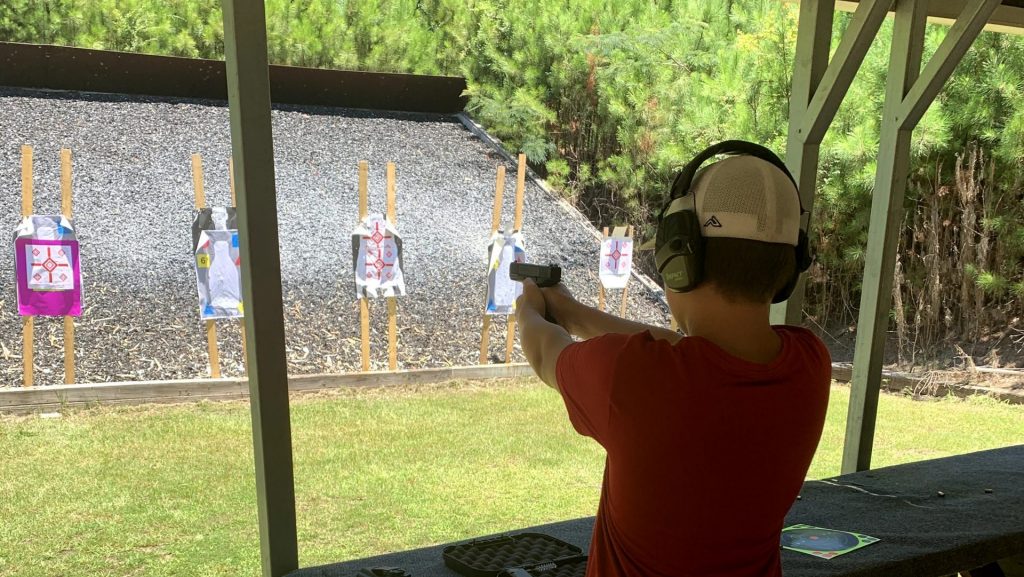
- Arrive with the firearm unloaded and cased unless the range rules say otherwise.
- Keep the muzzle pointed downrange and follow every cease-fire command immediately.
- Wear eye and ear protection, and confirm that guests have protection before live fire begins.
- Use the correct ammunition for the firearm and verify caliber markings before loading.
- If a shot sounds weak, recoil feels wrong, or the firearm malfunctions, stop and ask for help before firing again.
For structured skill development, continue to Firearms Training. Training should match the firearm, the use case, and the shooter’s current skill level.
Common Safety Failures To Avoid
- Assuming a firearm is unloaded without checking it.
- Pointing the muzzle at a person, even briefly.
- Placing a finger inside the trigger guard while moving or handling the firearm.
- Relying on a mechanical safety instead of muzzle discipline and trigger discipline.
- Storing a firearm, ammunition, or magazine where an unauthorized person can reach it.
- Continuing when a firearm, ammunition, or procedure is unfamiliar.
Next Steps
- If you are new to ownership, read the Beginner’s Guide to Firearm Ownership.
- If you need structured skill development, read Firearms Training.
- If you need a maintenance workflow, read the Gun Maintenance Guide.
- If you need to choose a locking device, review Best Gun Locks.
Safety Sources
Source set reviewed August 6, 2026. Recheck official guidance and local requirements before relying on this page.
- ATF: Learn About Firearms Safety and Security[1]
- CDC: Preventing Firearm Injury and Death[2]
- ATF Publication: Safety and Security for Firearm Owners[3]